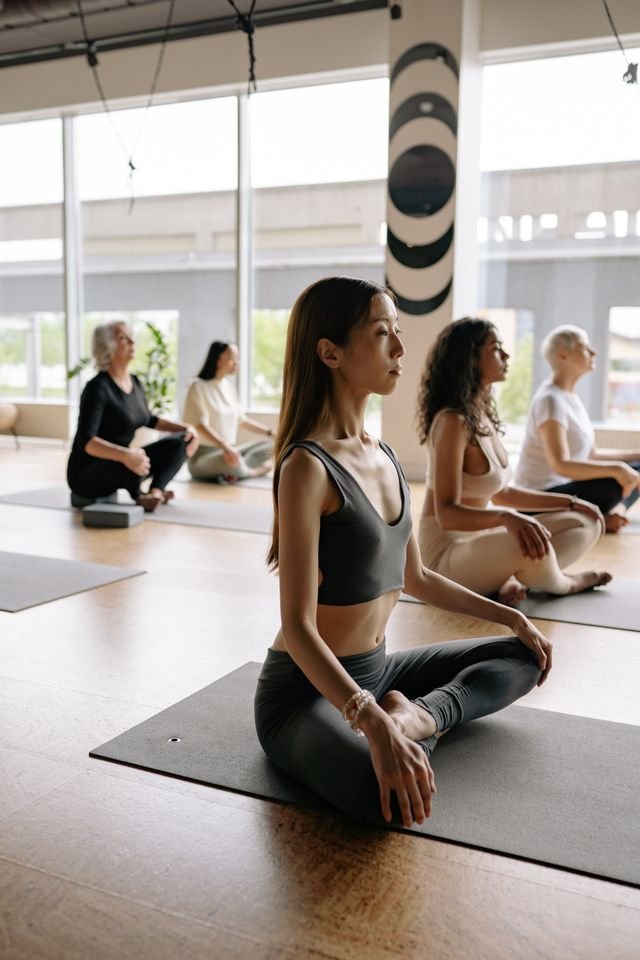
Most people who put off their first meditation class aren’t sceptical about meditation. They’re sceptical about the room — what happens in it, who else is there, and whether everyone will somehow know they’ve never done this before. So here is the whole thing, plainly, based on how beginner sessions across Perth actually run. We list forty-one meditation practices across thirty-one suburbs, from free Buddhist centre sittings to eight-week courses, and the first thing worth saying applies to all of them.
You don’t have to be good at meditation before you go to a meditation class. That’s rather the point of going. Nobody arrives able to sit perfectly still with an empty mind — including, on most nights, the teacher.
The thirty-second version
- You arriveSomeone points you to a seat and explains what you’ll be doing
- You sit, or lie downThen you follow a guided practice or a simple instruction
- Your mind wandersConstantly. That’s normal — it’s what minds do
- You come backTo the breath, or whatever the teacher gave you. That’s basically the practice
- The class endsYou get up and carry on with your day
The fear
That you’ll be expected to empty your mind, and fail in front of a room full of people who can somehow tell.
The reality
You are not expected to clear your mind. Noticing that you’ve drifted off, and coming back — that is the exercise. Nobody can see your thoughts, and nobody checks your progress.
What you’re probably wondering
Every beginner walks in with roughly the same list of worries, so let’s clear the list before anything else.
| The worry | The short answer |
|---|
| “What if I can’t stop thinking?” | You won’t be able to. Nobody can. See above |
| “Do I have to sit cross-legged?” | No — chairs are standard kit in most Perth rooms |
| “Do I have to close my eyes?” | Usually your call. Some practices use a soft, lowered gaze instead |
| “Will everyone know I’m new?” | No. In a beginner class, a good share of the room is as new as you |
| “What if I fall asleep?” | It happens, especially lying down. Nobody minds |
| “What if I hate it?” | You’ve lost one class. Try a different style or teacher before deciding |
Two more things nobody tells you in advance: you will never be asked to share anything out loud in a standard class, and you are allowed to move — adjust your legs, scratch an itch, cough, shift your weight. The goal isn’t to become a statue.
Three shapes a first class can take
“Meditation class” covers three quite different formats, and choosing the right one matters more than choosing the right suburb. A forty-five-minute guided drop-in and an eight-week course are not the same experience wearing different marketing.
01 — Guided drop-in: just try it
You arrive, a teacher talks you through the whole thing, you leave. No commitment, no homework, and the most beginner-proof format by a distance. Single sessions around Perth commonly start at $15–$25.
The door for: “I just want to see what this is.”
02 — Beginner course: actually learn it
Several weekly sessions where a method builds over time — mindfulness courses, Vedic instruction, eight-week MBSR programs. Costs more, teaches more, and assumes you’ll practise between sessions.
The door for: “I want to learn meditation properly, not just visit it.”
03 — Sitting group: less talk, more practice
A room that meets regularly to practise together, often at a Buddhist or community centre, with minimal instruction. Frequently free or by donation — and better once you know roughly what you’re doing.
The door for: “I’ve tried an app or a class. Now I want the habit.”
If you’re unsure, start with one guided drop-in before committing to a course. It’s the cheaper way to find out whether you want eight weeks of anything.
What happens when you walk in
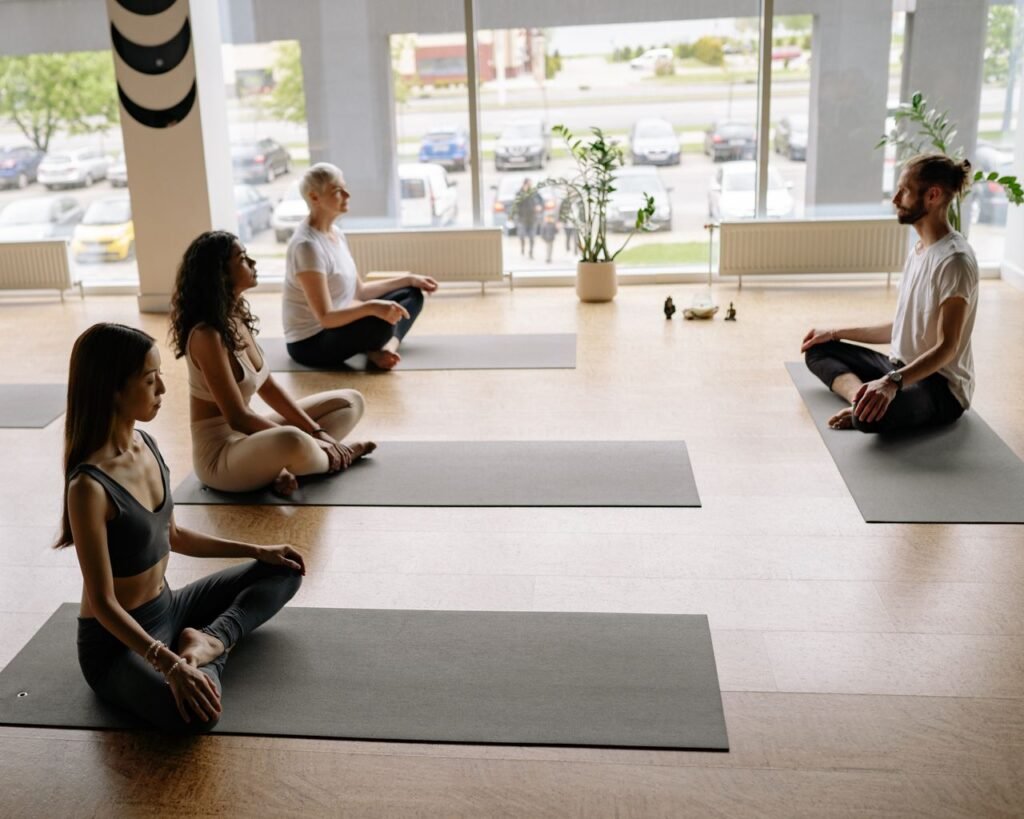
Arrive about ten minutes early. That leaves time to find the room, deal with shoes — most rooms have a shelf by the door — use the bathroom and choose a spot without rushing. Some meditation rooms close the door once a session begins, because the whole format depends on the quiet, so if you’re running late, message the organiser rather than assuming you can slip in.
The session itself usually runs: a short welcome, a few minutes on posture and what you’ll be doing, then the practice — commonly guided attention to the breath, with the teacher’s prompts spaced further and further apart — then a gentle return to the room, and sometimes a brief chance to ask questions. A first sit is typically fifteen to twenty-five minutes inside a class of forty-five to ninety, not the unbroken hour of silence people fear.
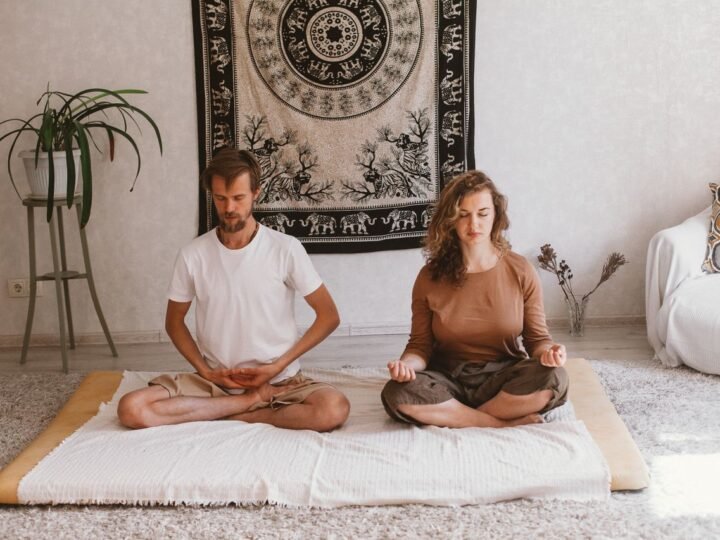
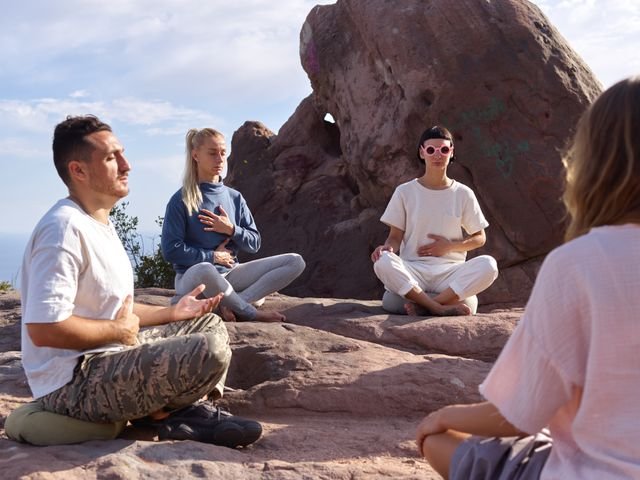
On seating, take whatever is comfortable:
- A chair is completely fine — nobody grades you down for it
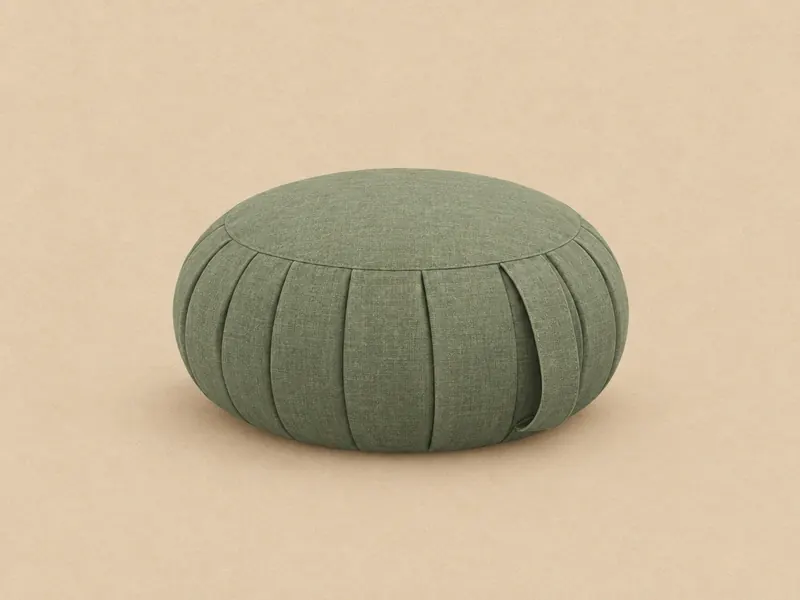
- A cushion is fine if your hips and knees agree
- The floor or a mat, if that’s what the class uses
- Lying down, when the format calls for it — and switching halfway through is normal
There is no prize for sitting in the most uncomfortable position.
And here is what the practice actually feels like from the inside. You start following your breath. You remember an email. You notice your knee. You plan dinner. You realise you’ve been somewhere else for five minutes. You come back. That loop — thought, notice, return — repeats for the whole sit, and the returning is the practice. A teacher who tells you otherwise is selling something.
Quiet rooms can also make you more aware of feelings than a normal Tuesday does. If something comes up and you’d rather not sit with it, you can open your eyes, change position, step outside, or quietly tell the teacher — all four are ordinary and none will raise an eyebrow.
One honest caveat
Meditation isn’t comfortable for everyone in every circumstance. If a practice causes you significant or persistent distress, stop and seek appropriate support — and if you’re managing a mental-health condition and unsure whether a class format suits you, that’s a conversation for a qualified health professional, not an article.
Guided or silent, spiritual or secular
Teachers work with different tools — breath, body scans, mantra, visualisation, sound, walking, open awareness — and different amounts of talking. For a first visit, the amount of talking matters most.
| Guided | Mostly silent |
|---|
| Teacher speaks | Often, throughout | Briefly, then rarely |
| When your mind wanders | The next prompt catches you | You’re on your own to notice |
| Structure | High | Low |
| First visit | The easier start for most people | Better with some experience |
Is meditation religious? Sometimes, and sometimes not — and Perth genuinely has the full spread. The directory includes Zen and Theravada Buddhist centres in Beaconsfield and Nollamara, Tibetan-tradition centres in Bibra Lake and the city, Vedic and Transcendental Meditation teachers, Brahma Kumaris in Cannington, the Sri Chinmoy Centre in Inglewood — and, on the other side of the ledger, entirely secular mindfulness classes and MBSR courses with no tradition attached. None of this is hidden, but it isn’t always on the poster either.
If the framework matters to you, read the class description before booking — and don’t choose on the title alone. “Meditation” and “mindfulness” get used almost interchangeably; what you want to know is what you’ll actually be doing for the hour. It’s also worth knowing meditation isn’t only sitting still: walking practice, breathwork and sound baths are all doors into the same quiet, for people whose bodies don’t love a cushion.
What it costs in Perth
Of the forty-one meditation practices we list, thirteen publish starting prices, ranging from $15 to $1,495 with a median of $89 — a spread that says less about classes and more about what’s being sold. The honest way to read it is in layers.
| Way in | What it costs | In the directory |
|---|
| Free or by donation | $0 — donate if you like | Five practices, mostly Buddhist and community centres |
| Single class | Published starts from $15–$25 | The typical first booking |
| Studio session or sound-based sit | Roughly $25–$50 | Yoga studios, sound temples |
| Course or program | $150 up to $1,495 | Multi-week instruction — the top figure is a program price, not a class |
The number worth underlining is the first one. You don’t have to spend $100 to try meditation — five Perth practices run sittings free or by donation, including the Dhammaloka Buddhist Centre in Nollamara and the Zen Group of WA in Beaconsfield, and they’re used to complete beginners walking in. The free and by-donation options are listed here.
Eight of the forty-one also run sessions online as well as in person. If the thing putting you off is specifically “a room full of strangers,” an online introduction is a perfectly reasonable first step — just harder to stay off your phone. Figures checked against our directory in August 2026; prices move, so confirm before booking.
Choosing your first class
Class descriptions do most of the filtering for you, if you know which words to look for:
- “Beginner”, “introduction” or “intro” — written for you
- “Guided” — the teacher carries the session
- “All levels” or “no experience necessary” — you won’t be the odd one out
- “Drop-in” — no course commitment, just come
A class without those words isn’t necessarily unfriendly to beginners — sitting groups rarely advertise at all — but the words are a reliable green light. If a description leaves you guessing, ask the venue directly: is this suitable for a complete beginner, how much is guided, do I need to sit on the floor, is it secular or part of a tradition, and do I need to book? Five questions, one message, and every good venue answers them happily.
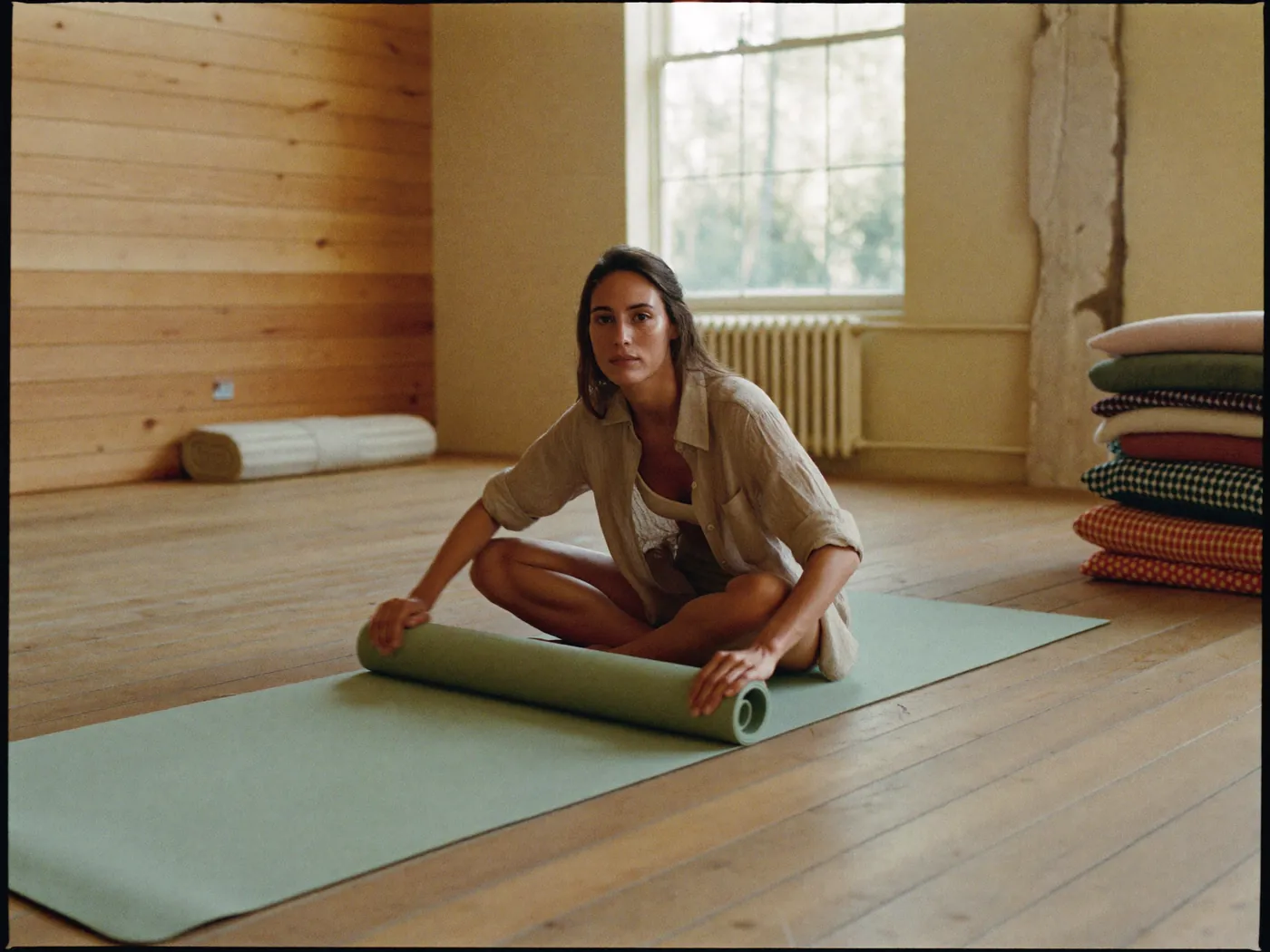
Wear anything you can sit comfortably in — people come to evening classes in work clothes, and the 6am crowd comes in whatever they slept in, more or less. Bring nothing unless the venue asks; cushions and mats are almost always provided, and it’s worth one line in your booking message to check.
And if the first class doesn’t land — that’s information, not a verdict. You may have disliked the teacher, the room, the tradition, the talking or the silence long before you disliked meditation, and teachers vary far more than the practice does. A fair test is the three-class experiment: one guided drop-in, one secular mindfulness session, one traditional sitting group. Then ask the only question that matters — which one made you want to come back?
Parts of it will be boring. Five minutes will occasionally feel like forty. That isn’t a sign you’re doing it wrong — but you don’t have to force yourself to love a style that bores you, either.
Finding a class near you
A few of the best-rated rooms to start with:
Or start from where you live:
Quick answers
Do I need to know how to meditate before attending a class?
No. Beginner and guided classes exist precisely to teach you the basics — turning up not knowing what to do is the expected starting point, not a problem.
Do I have to sit cross-legged?
No. Chairs are standard in most Perth meditation rooms, cushions are optional, and switching position partway through a class is completely normal.
What should I wear to a meditation class?
Anything you can sit or lie in comfortably. People come to evening sessions straight from work; nobody is assessing your outfit.
What actually happens at a meditation class?
Usually a short welcome, a few minutes on posture and technique, a guided practice of fifteen to twenty-five minutes, a gentle return to the room and sometimes questions afterwards. Formats vary by teacher and tradition.
What if my mind keeps wandering?
It will, constantly, and that’s not failing. Noticing that your attention has drifted and returning it to the practice is the exercise itself.
Is meditation religious?
Some Perth classes sit inside Buddhist, Vedic or other traditions; others are entirely secular mindfulness. Both are well represented locally — read the class description if the framework matters to you.
How much does a meditation class cost in Perth?
Published single-class starts in our directory begin at $15–$25, studio sessions run roughly $25–$50, and multi-week courses range from about $150 to $1,495. Five practices are free or by donation. Checked August 2026.
Should I start with a course or a drop-in class?
A single guided drop-in is the lower-commitment test. If you finish it wanting more structure, a beginner course is the natural next step.
And if you’d rather ease in sideways — a sound bath is meditation with the instructions replaced by sound, and our getting active in Perth guide covers the moving kinds of quiet. The room is friendlier than you think. Go see it.




 Illustration