The first thing to know is that you don’t do anything. That sounds obvious written down, and it is still the part people get wrong — they arrive braced for a class, ready to be corrected on their posture or asked to introduce themselves to the room, and instead they are told to lie on the floor and stay there for an hour. Some people find that the easiest thing they have ever been asked to do. Others find it unexpectedly hard.
A sound bath is not a massage, a therapy session or a yoga class with music. There is no technique to learn and nothing to keep up with. Somebody plays instruments at you while you lie still, and that is the entire format. What follows is what an hour of sound healing actually looks like, in order, so you can decide whether it’s your kind of evening before you’ve paid for it.
The short version
Book one if the appeal is an hour where nothing is asked of you — and being in a room with strangers doing the same doesn’t put you off. Don’t book one if you were hoping for something to do — you’ll spend the hour waiting for the class to start. If that’s you, a float tank gives you the same quiet on your own, and breathwork gives you something active.
Around $40 to $45 for a casual session in Perth. Bring socks.
Sound bath, sound healing, sound therapy
Three names circle the same evening, and the difference between them is mostly marketing. Sound bath is what the room is usually called on a timetable: a group lies down, someone plays, you leave. Sound healing is the broader label a practitioner tends to use for their own practice, and it’s the phrase you’ll see on most Perth studio pages — it covers group sessions and one-to-one work alike.
Sound therapy is muddier, because that phrase also belongs to clinical audiology — tinnitus retraining and the like — which has nothing to do with crystal bowls on a studio floor. If a listing says therapy, check what qualification sits behind the word.
None of the three is a regulated title in Australia. That cuts both ways: the person with twenty years and a teaching practice and the person who bought a bowl set in March can both advertise the same evening, and the listing won’t always tell you which is which. Session descriptions are more revealing than bios — a practitioner who explains what the hour contains is usually a practitioner who has run it many times.
Before it starts
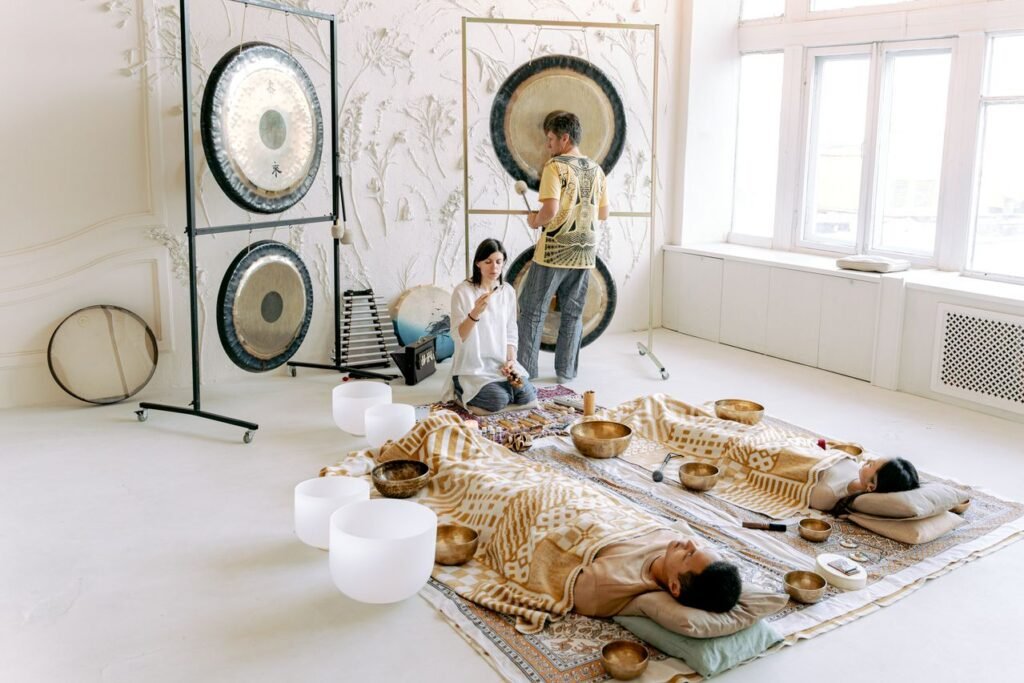
You arrive ten minutes early because the email said to, shoes come off at the door, and somebody points you at a pile of mats. In most Perth rooms the gear is provided — Restful Waters up in the hills above Armadale lays out mats, bolsters and blankets, and you’d want the blanket. Lying still for an hour makes you cold in a way that sitting still doesn’t.
Then comes the only genuinely awkward part of the evening, which is choosing where to lie down. People do this badly. The instinct is a spot at the edge, near the door, at a polite distance from everyone — but the closer you are to the bowls the more you feel it physically rather than just hear it, and the near-the-door spot is where you’ll spend the hour listening to the corridor.
Head towards the instruments, not away from them. If it’s too much you can move; nobody minds, and nobody is watching you.
The first ten minutes
The facilitator talks for a bit, and how long they talk depends entirely on who is running the room — this is the single biggest difference between one session and another, and nothing on a booking page reliably tells you which you are getting. Some keep it to a sentence: where the toilets are, don’t worry if you fall asleep, we start now. Others open with a longer framing built around an intention for the evening, a theme, sometimes a reading.
Neither is better, but they’re different evenings, and it’s worth knowing which you’re walking into. A women’s circle that pairs sound with cacao and yin is explicitly a ceremony and says so. A drop-in crystal-bowl session at Trigg on a weeknight is closer to turning up at a cinema. If ceremony makes you itch, read the session description rather than the venue’s homepage — the individual listing is where that difference shows up.
Then usually a short settling: a few slow breaths, a scan down through the body, lights down. And then it begins, and there’s nothing more required of you for the next hour.
What you’re actually hearing
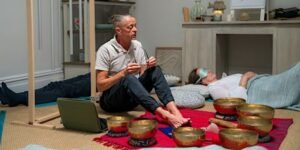
Crystal singing bowls are the ones in all the photographs — frosted white, played by running a mallet around the rim, each holding a single sustained note that takes a long time to arrive and a long time to leave. Most Perth sessions are built around a set of them, tuned to different pitches so the notes stack.
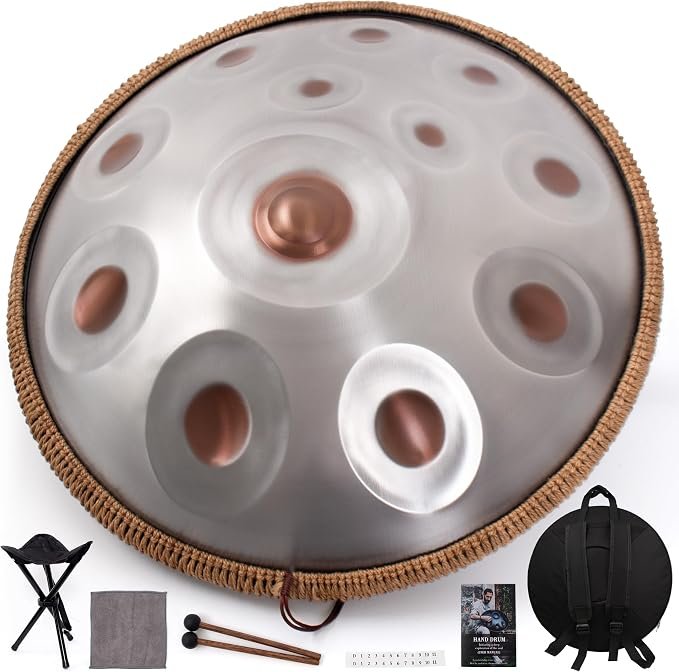
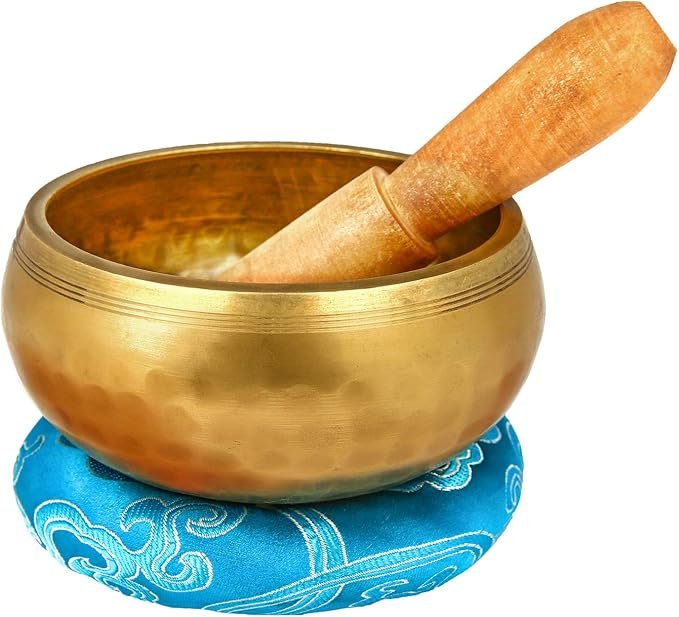
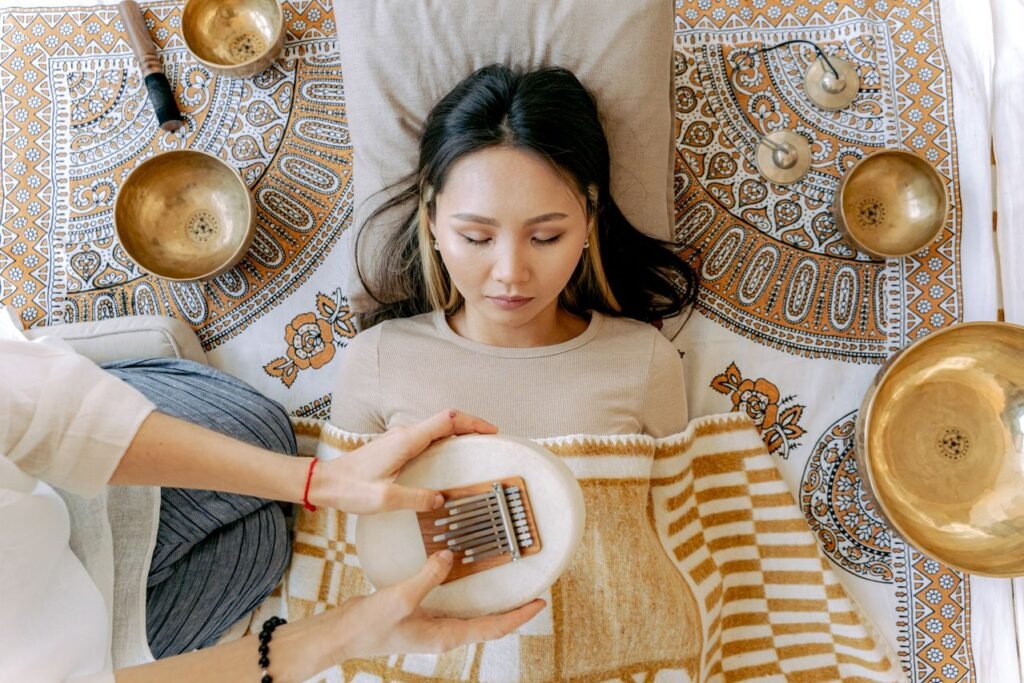
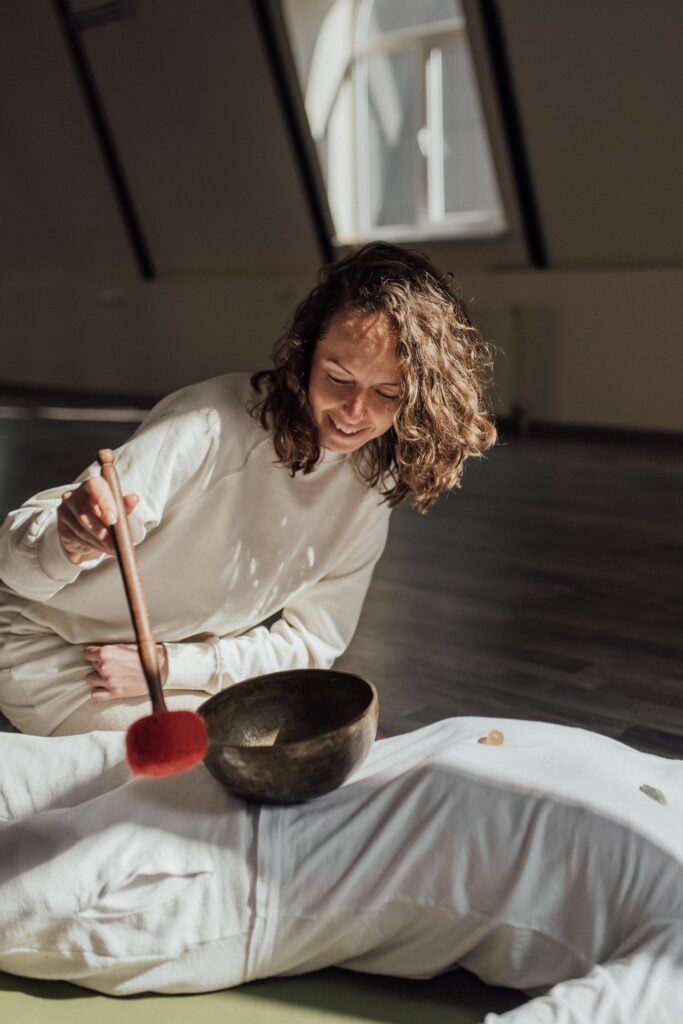
Tibetan bowls are the older, hammered metal ones, and they sound nothing like their crystal cousins: darker, shorter, with a wobble in the note rather than a clean tone. A room built on metal bowls is a rougher, earthier hour than a room built on crystal, and studios rarely say which they use. Around either you’ll get chimes, a rain stick or ocean drum, tuning forks, sometimes a handpan, sometimes voice.
And often a gong, which is worth flagging: a gong is not a gentle instrument. Played properly it goes from nothing to filling the entire room, and if you were drifting off it will wake you — that is not a mistake but the point of that part, though people are frequently surprised by it and a few find it genuinely unpleasant.
The sound also moves, because facilitators walk the room as they play — a bowl that was somewhere across the space arrives beside your head, holds there, and then leaves again. Close to the instruments the low notes land in the chest and the feet a fraction before the ear registers them, which is the part most first-timers describe afterwards and the reason the spot near the door is a waste of an evening.
The middle, where most people go wrong
Twenty minutes in, somebody in the room starts snoring. This happens at essentially every session, nobody reacts, and the facilitator does not break stride.
Meanwhile you are lying there running your inbox. This is the bit nobody warns you about: for a good stretch of your first sound bath you will be bored, faintly self-conscious and mentally drafting an email — then somewhere around the halfway mark you’ll notice you have stopped, immediately notice that you noticed, and start again.
None of that means it isn’t working. There’s nothing to work. The people who leave disappointed are almost always the ones who arrived expecting a state to be delivered to them, decided at minute twenty that it wasn’t happening, and spent the remaining forty minutes checking. An hour where you got a bit bored and then dozed off is not a failed sound bath. That’s a normal one.
Your back may complain. Floors are floors — an hour is a long time — and if you know your lower back doesn’t love lying flat, take a cushion for under your knees. Nobody will think anything of it — the room is full of people arranging themselves.
How it ends
The instruments thin out and then stop, leaving a couple of minutes of genuine silence in a room of twenty people, which is often the part anybody remembers a week later. Then a quiet instruction: fingers and toes first, roll onto one side, sit up in your own time. The landing is deliberately unhurried and takes longer than seems necessary.
Then the lights come up and everybody looks mildly stunned, in the way of a cinema audience at the end of something long. Some rooms put tea on and half the group stays talking; others empty in ninety seconds flat. Both are normal, and leaving straight away is not rude. You’ll be spacey for half an hour or so, so plan the drive home accordingly.
Choosing your first one
The venue matters considerably more than the instruments, and Perth sessions split roughly three ways.
- Drop-in, in a studio. The lowest-commitment version — Sound Healing Perth runs weekly crystal-bowl sessions at Trigg, Fremantle and Victoria Park. Turn up, lie down, leave.
- Bolted onto something else. Add Goodness on Beaufort Street runs sound alongside breathwork, yin and yoga nidra, so the timetable lets you try several formats before deciding which one you’ll come back for.
- Out of town, as an event. Restful Waters at Bedfordale runs fortnightly Sunday immersions plus sunset and full-moon sessions, and the bush setting is half of it — a drive, and a different proposition from a Tuesday night in a studio.
Where we’d send a first-timer
Four rooms worth a first visit, one from each of those camps. Prices and suburbs come straight from the directory, so this says what they charge this week rather than what they charged when it was written.
If none of those are your side of the river, the rest by area:
What’s on next
The one-off sessions — full moons, sunsets, the cacao-and-sound evenings — don’t sit on a weekly timetable and have to be caught. Next in the diary:
The questions people ask first
How long is a sound bath?
An hour is standard in Perth — lunchtime sessions run 45 minutes, and event-format immersions like the full-moon and sunset ones stretch to 90. The playing stops a few minutes before the advertised finish, because the room is brought back up slowly rather than switched off.
What does it cost?
Between $35 and $45 casual across most Perth studios, with intro multi-packs bringing that down a little. Event sessions in a bush setting, or anything pairing sound with cacao and a longer ceremony, run higher — $55 to $70 is common. Prices sit on each listing.
What should you bring and wear?
Socks, layers you can lie down in, and a cushion if your lower back is fussy about flat floors. Mats, bolsters and blankets come with the room almost everywhere in Perth — the exception is a studio squeezing sound into a regular timetable slot, which sometimes assumes you brought your own mat.
Can you fall asleep?
Yes, and a good portion of the room will — facilitators expect it and say so in the opening remarks. Snoring is common enough that nobody looks up, and the gong tends to sort it out anyway.
Is it a religious or spiritual thing?
Depends entirely on the room, and this is the thing to check before booking rather than after. A weeknight studio drop-in is usually presented as an hour of sound and nothing more. A circle built around intention-setting, cacao or ceremony is a different evening, and those listings say so plainly in the session description.
Where to start
Everything above is on the sound healing page, with prices and timetables, and the wider Sound & float category covers the tank end of things too. Upcoming one-off sessions turn up on what’s on in Perth, which is where the event-format ones live.
If you’re weighing this against the other quiet hour in town, we wrote separately about which recovery session to book first — a sound bath and a float are both an hour of doing nothing, but one has other people in the room and the other doesn’t, and that turns out to be the whole difference.
Not sure it’s the thing you want? The Wellness Finder asks four questions and points you at whatever fits, which some evenings is a sound bath and some evenings is a walk.
Oria Haven is a directory, not a health service. This describes what happens in the room, not what it will do for you — if you have a health concern, speak with your GP or a registered practitioner.



 Illustration