How to choose a singing bowl
Metal or crystal, hand-hammered or machine-spun, and why the mallet matters nearly as much as the bowl. What 432Hz and 440Hz actually mean, what the money buys at each step, and why the first thing to do is hear one in a room.

The single most useful thing you can do before spending a dollar is to sit in a room with twenty of them being played properly by somebody who does it for a living.
This article won’t tell you what a singing bowl does to you. That’s not a directory’s call to make, and anyone handing you a frequency chart with outcomes printed on it has travelled a long way past what can actually be shown. The useful part is the object itself — because a bowl is a piece of hammered metal with a price on it, and nearly every question worth asking before you buy one has a plain answer that nobody seems to bother writing down.
So here’s the short version, up front. For a first bowl, buy hand-hammered metal, somewhere between ten and fifteen centimetres across, sold as a set with a mallet and a cushion. Sixty to a hundred dollars is the honest range. Everything below is why, and the fuller version lives on the singing bowls page.
Metal or crystal is the first fork in the road
Metal bowls — the ones sold as Tibetan or Himalayan — are an alloy, and they give you several notes at once: a main tone with a wash of others moving underneath it that never quite settles. Quartz bowls do something different. One pure, loud, sustained note, with very little else in it, for three to ten times the money.
Crystal is also breakable in a way metal isn’t. A metal bowl survives a drop onto floorboards with a dent and a story attached to it, and it will still ring afterwards. A quartz bowl of the same size doesn’t survive it at all. If this is your first one, that settles the question on its own.
Hand-hammered means the marks are the point
Pick up a hand-hammered bowl and you’ll feel a surface that isn’t smooth — dimples, a rim that wanders slightly, tool marks catching the light. That unevenness is what makes the tone long and a little restless, because no two parts of the wall are quite identical and they don’t ring in perfect agreement with each other.
Machine-spun bowls are smoother, cheaper and far more consistent — and there is nothing wrong with owning one. The tone comes out cleaner and stops sooner. What you’re paying extra for with a hammered bowl is irregularity, which is an odd thing to hand over money for until you’ve heard the two of them side by side.
Size sets the note, and nothing else much does
Pitch comes from diameter and wall thickness — so when a listing advertises a bowl as a C or an F, that note is a consequence of the dimensions rather than a feature somebody added on top. Bigger runs lower and carries further. Smaller runs higher and quieter, and sits in one hand while you’re still working out what the rim wants from you.
Ten to fifteen centimetres is the useful first range. It’ll fill a room without filling the house — and it’s forgiving while you learn how much pressure to lean into. Anything past twenty centimetres is a room instrument rather than a table one, and that’s a bowl you want to have heard in person before you agree to live with it.
The mallet is half the instrument
This is the part that almost never gets mentioned — and it’s the one that ruins the most first bowls. What you strike and rub the bowl with matters nearly as much as the bowl does, and plenty of cheap sets ship a single wooden striker expected to do two jobs when it can only do one of them.
- Suede or leather-wrapped ends are for striking. They give you the note without the clack of wood meeting metal on the way in.
- Bare wood is for running the rim, because it grips where suede slides. That’s the motion that takes a few minutes to learn and looks impossible for the first three of them.
Strike a bowl with a bare wooden striker and it’ll sound like a spoon on a saucepan — and you will quietly conclude that you bought a bad bowl. The bowl is fine. Check what’s in the box before you decide otherwise.
The cushion isn’t an accessory
A bowl sitting flat on a hard surface is a bowl being muted, because the table takes exactly the part you were trying to hear. It wants a ring cushion underneath it, which is why sets are usually the sensible buy — a bowl sold on its own rarely includes one, and that is the reason a second parcel containing a mallet and a cushion turns up a week after the first.
What 432Hz and 440Hz actually mean
You’ll see both numbers on listings, usually with a good deal of meaning hung off them. Here’s the plain version: they are tuning references — the frequency the note A is set to, from which every other note in the scale is measured. 440Hz is the modern orchestral standard. 432Hz is a slightly lower alternative that some makers prefer.
That’s the entire fact. It tells you how your bowl will sit against other instruments and recordings, and it tells you nothing further that anybody can demonstrate. That is as far as it goes, and a seller who pushes past it is telling you about their marketing rather than about the metal.
What the money buys at each step
Under about thirty dollars you’re buying a thin machine-made bowl — generally with a wooden striker and no cushion. It will make a sound. Between sixty and a hundred you’re into hand-hammered sets with a proper mallet, a cushion, and enough wall to hold a note for ten or twelve seconds, which is the band both bowls in the shop sit in, because that is where the jump in quality is steepest.
Past two hundred you’re paying for size, age or provenance — antique bowls, larger diameters, named workshops. Those are worth the money to somebody who already knows precisely what they’re after, which by definition is not a first purchase. The rest of the shop is built on the same rule.
Go and hear one, from somebody we earn nothing from
Here’s the part that costs us something to say. We’re an affiliate — buy a bowl through our shop and a commission comes back to us. And the single most useful thing you can do before spending a dollar is to sit in a room with twenty of them being played properly by somebody who does it for a living, which earns us precisely nothing and will teach you more than this article has.
A recording flattens all of it. Most of what you notice happens in the room rather than in the note, and no set of headphones has yet reproduced that. Close to twenty practices run sound sessions across Perth, typically sixty to ninety minutes, usually lying down, in groups of eight to forty. The piece on what happens at a sound bath covers the practical side, and the sound and music category holds everything adjacent to it.
If sitting still for an hour is the unfamiliar part rather than the bowls, your first meditation class and breathwork styles explained both start further back. The meditation listings are the wider set, and compare experiences puts sound work beside the alternatives when you’d rather see them together.
Where to start this week
Book a session before you buy anything — an hour in a room costs less than the cheapest bowl, and it answers the question the product photos can’t. Browse the sound healing practices, or start wider with everything listed around Perth. When you already know the sound and want the object, the two bowls we’ve picked and the rest of the buying detail sit on the singing bowls page.
Oria Haven is a directory, not a health service. If you have a health concern, speak with your GP or a registered practitioner.
Loads Instagram’s player, which may set cookies.
About the Reel
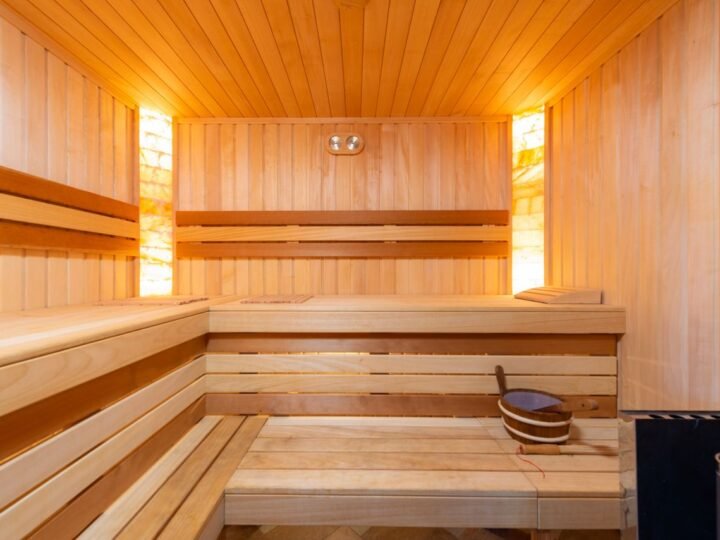
The Reel, from Australia’s South West, introduces the floating sauna at Pemberton Pool: two wood-fired sauna rooms on the water with big windows onto the karri forest, and the ritual its caption describes — warm up, step outside into the pool, and repeat.
Open the original on Instagram (opens in a new tab)Trend to Try
WA’s first floating sauna, on Pemberton Pool
Reel by Australia’s South West @australias_southwest · South West, Western Australia
Reel by Australia’s South West, the regional tourism account, posted 12 August 2026 with @floatingsauna_pembertonpool.
It captures the setting and the whole hot–cold ritual — including the dive that deserves a word of caution.
Understand this trendShown through Instagram’s own embed. Australia’s South West is not affiliated with Oria Haven and has not reviewed this page.